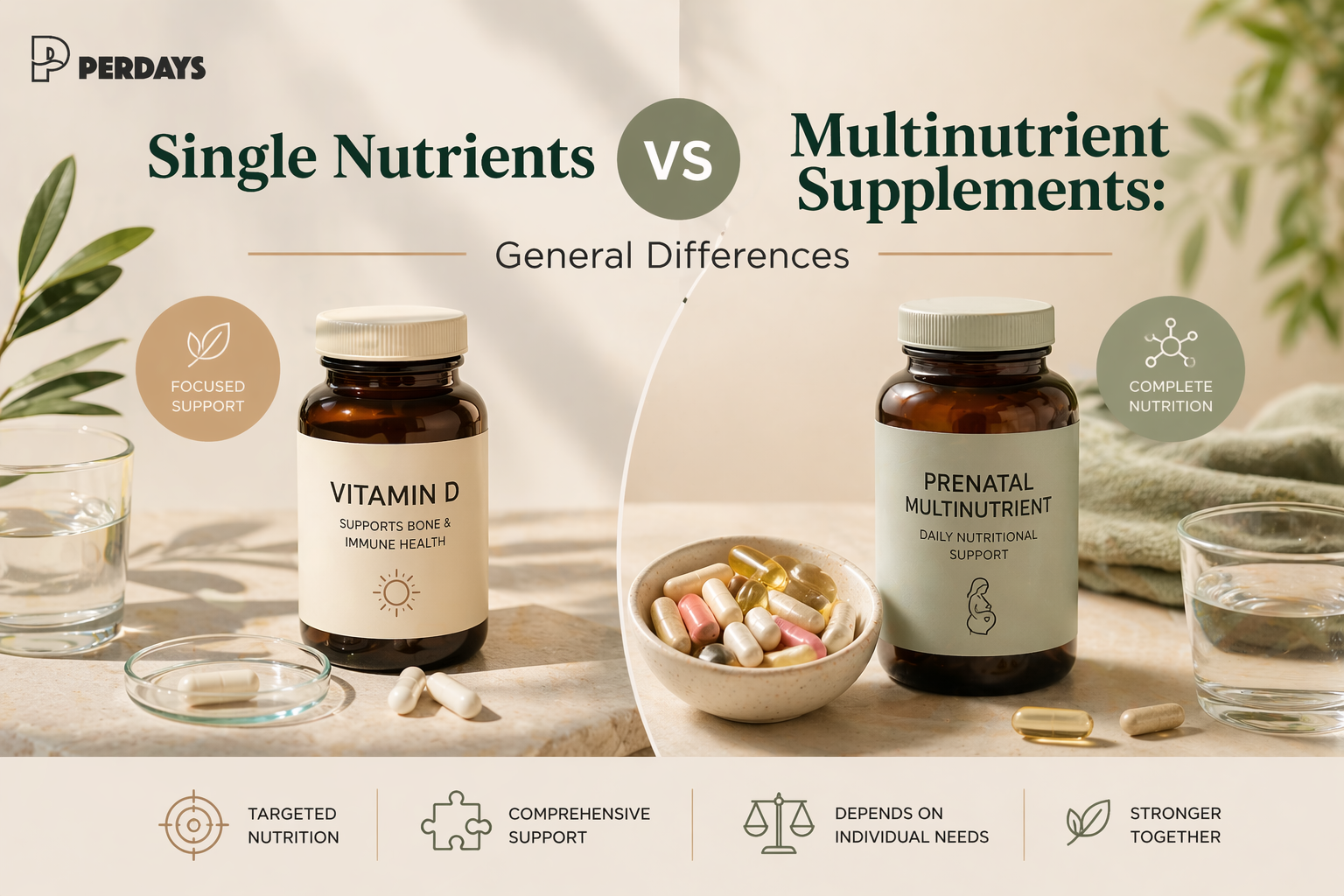
In everyday nutrition discussions, supplements are often described based on how many nutrients they contain. Some products include only one nutrient, while others combine multiple vitamins and minerals in a single formulation. Understanding the difference between single-nutrient supplements and multinutrient supplements can help clarify how these products are presented and discussed in general nutrition contexts. These differences are typically explained in terms of formulation, ingredient composition, and how nutrients are grouped in both food and supplement settings.
What Are Single Nutrient Supplements?
Single nutrient supplements are products that contain one specific vitamin or mineral. These supplements are typically formulated to include only a single active nutrient, which is listed clearly on the label. In discussions about single nutrient supplements, the focus is usually on the presence of one ingredient rather than a combination of nutrients.
These types of supplements may appear in various forms, such as tablets, capsules, powders, or liquids. Their formulation is generally straightforward, as they are designed around a single nutrient rather than a broader nutrient profile. In nutrition education, single-nutrient supplements are often described in contrast to multinutrient formulations to help explain how supplements differ in composition.
What Are Multinutrient Supplements?
Multinutrient supplements contain a combination of vitamins and/or minerals within a single product. These supplements are often referred to as multivitamins when they include a range of vitamins, although formulations can vary widely.
In multinutrient supplements, several nutrients are included together as part of a combined formulation. The selection and number of nutrients may differ depending on the product and its intended formulation approach. In general nutrition discussions, multinutrient supplements are often used as examples of how nutrients can be grouped together within one product.
Key Differences Between Single and Multinutrient Supplements
The difference between single nutrient supplements and multinutrient supplements is primarily based on how many nutrients they contain and how they are formulated.
Number of Nutrients
Single nutrient supplements contain one vitamin or mineral, while multinutrient supplements include multiple nutrients within the same product. This distinction is one of the most straightforward ways to understand how these supplement types differ.
Formulation Approach
The formulation of single-nutrient supplements focuses on one ingredient, resulting in a simpler composition. In contrast, multinutrient supplements are developed by combining several nutrients into a single formulation. This approach reflects how nutrients are sometimes grouped in nutrition discussions and product design.
Typical Use in Nutrition Education
In nutrition education, single-nutrient supplements and multinutrient supplements are often used to explain different ways nutrients can be presented. Single nutrient supplements highlight individual nutrients, while multinutrient supplements demonstrate how multiple nutrients can be included together in one formulation.
Single Nutrients and Multinutrients in Everyday Nutrition
Both single-nutrient supplements and multinutrient supplements are commonly discussed in the context of everyday nutrition. These discussions typically focus on how nutrients are obtained from food and how supplements may also contain similar nutrients in different formats.
In some contexts, individuals may explore nutrients included in preconception supplements as part of broader nutrition awareness. These products often contain multiple vitamins and minerals grouped, reflecting how nutrients are commonly presented in multinutrient formulations.
How Supplements Are Formulated
Supplement formulation refers to how nutrients are selected and combined within a product. In single nutrient supplements, formulation is centred on one nutrient, while multinutrient supplements involve combining several nutrients into one product.
The choice of nutrients and their amounts can vary depending on the formulation approach. Ingredient lists on supplement labels typically show each nutrient included, allowing individuals to see whether a product contains one nutrient or multiple nutrients.
Can Nutrient Needs Differ Between Individuals?
Nutrient intake and dietary patterns can vary between individuals based on factors such as food choices, lifestyle, and cultural dietary habits. Because of this variability, discussions around single-nutrient supplements and multinutrient supplements are generally presented in a broad and non-prescriptive way.
Different individuals may approach nutrition in different ways, and the way nutrients are obtained from food or supplements can vary accordingly.
FAQs About Single Nutrients vs Multinutrient Supplements
What is a single nutrient supplement?
A single nutrient supplement is a product that contains only one vitamin or mineral as its active ingredient. These supplements are formulated around a single nutrient and are typically labelled to clearly identify that specific ingredient.
What is a multinutrient supplement?
A multinutrient supplement is a product that contains a combination of vitamins and/or minerals within one formulation. These supplements may include multiple nutrients grouped, and the number and type of nutrients can vary depending on the product.
Are multinutrient supplements the same as multivitamins?
Multinutrient supplements and multivitamins are closely related terms, but they are not always identical. Multivitamins usually refer to products that contain a range of vitamins, while multinutrient supplements may include both vitamins and minerals in a single formulation.
Can someone take both single and multinutrient supplements?
Some individuals may use different types of supplements depending on their dietary patterns and preferences. However, suitability can vary, and it is generally recommended to seek advice from a qualified healthcare professional before combining supplements.