Capsules vs Tablets: Differences and How Powders Compare
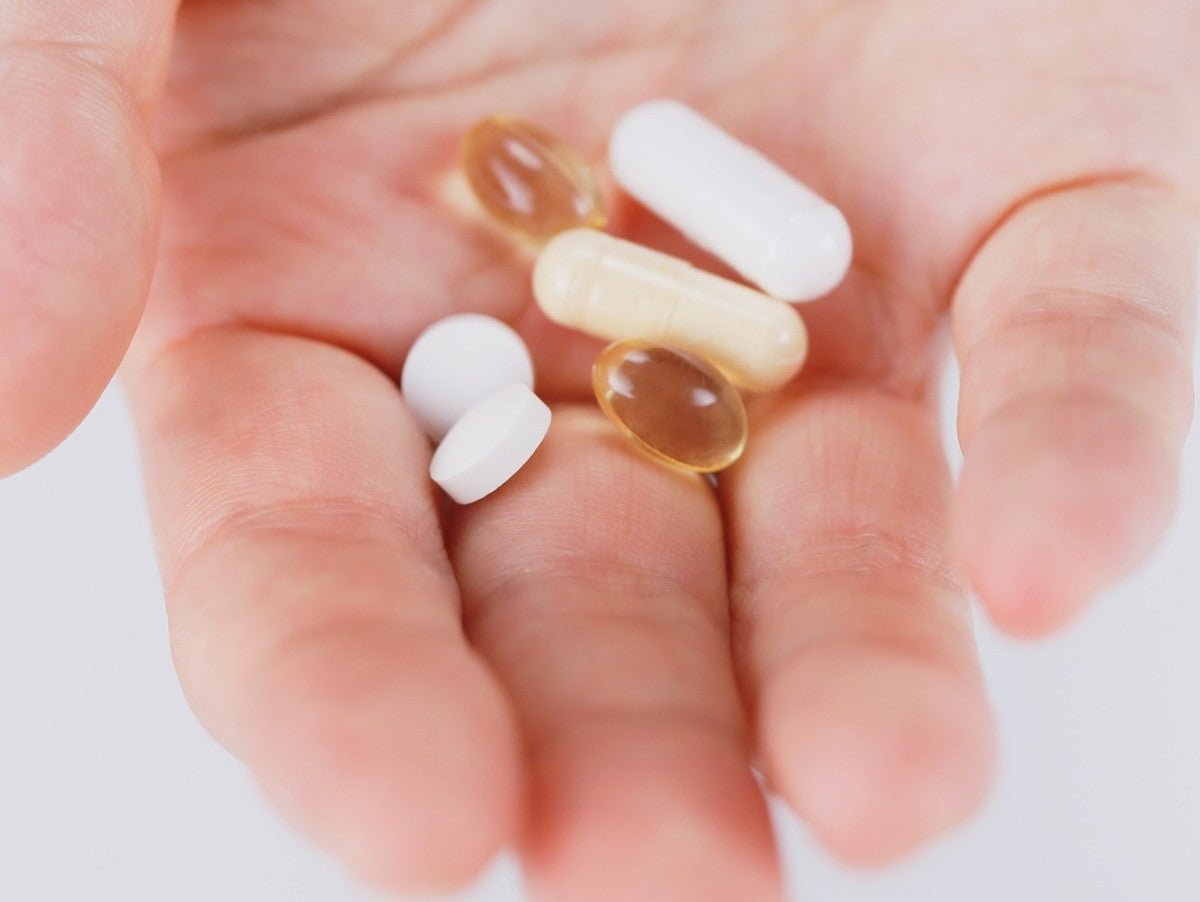
Capsules and tablets are two common ways to take nutritional supplements, but they differ in how they're made, what they contain and their physical characteristics. Capsules enclose ingredients within an outer shell, while tablets are solid dosage forms commonly made by compressing ingredients together.
Both formats can deliver vitamins, minerals and other nutrients, although neither is necessarily better absorbed or simply because of its form.
Powder supplements offer another option, often taken directly or mixed with liquid or food, depending on the product. Understanding how these formats compare can help you choose a supplement based on its formulation, nutrient content and suitability for your daily routine.
What Is the Difference Between Capsules and Tablets?
The main difference between capsules and tablets is their physical structure. Capsules contain ingredients inside a shell, whereas tablets are formed into solid units, usually through compression. Their shape, manufacturing ingredients and release characteristics can vary depending on the formulation.
Capsules commonly contain powdered and/or liquid ingredients enclosed in a gelatin-based or plant-derived shell. Tablets combine active ingredients with other substances that help create and maintain their solid structure.
Here's how their main characteristics compare:
| Feature | Capsules | Tablets |
|---|---|---|
| Structure | Ingredients enclosed within an outer shell | Solid unit, commonly formed by compression |
| Common types | Hard capsules and softgels | Coated, uncoated, chewable and other tablet types |
| Ingredients | May contain powders, granules or liquids | Contain active ingredients and formulation materials |
| Outer material | Gelatin or suitable plant-derived shell materials | May have a coating or an uncoated surface |
| Dissolution | Depends on shell, contents and formulation | Depends on ingredients, coatings and formulation |
| Swallowing | Influenced by size, shape and shell | Influenced by size, shape and coating |
| Convenience | Generally taken as individual units | Generally taken as individual units |
The Therapeutic Goods Administration (TGA) recognises different types of tablets and capsules, including formulations with modified-release characteristics.
The difference becomes more meaningful when you consider what each format is made of and how it behaves after being swallowed.
How Are Capsules and Tablets Made?
Capsules and tablets are made using different formulation methods. Capsules generally require a shell that holds the supplement ingredients, while tablets are commonly produced by compressing a prepared mixture into a solid shape.
These methods help determine the finished product's structure, size, stability and release characteristics.
What Are Supplement Capsules Made Of?
Supplement capsules consist of an outer shell and the ingredients contained within it. The shell helps keep the formulation together until it is taken.
There are two common capsule types:
- Hard capsules:Usually consist of two fitted shell pieces and commonly contain powders, granules or pellets.
- Softgel capsules:Have a sealed, flexible outer shell and commonly contain oils or other compatible liquid or semi-solid formulations.
Capsule shells may contain gelatin, which is animal-derived, or plant-derived materials such as hydroxypropyl methylcellulose (HPMC), depending on the product.
The ingredients inside a capsule are not necessarily limited to vitamins or minerals. Capsules can also contain oils, probiotics and other supplement ingredients, depending on their formulation.
The shell material, filling ingredients and manufacturing approach can all affect how a capsule performs. A capsule's physical appearance alone does not tell you whether it is more natural, more concentrated or better absorbed than a tablet.
What Are Supplement Tablets Made Of?
Supplement tablets are solid preparations commonly manufactured by compressing active ingredients together with other formulation materials.
Alongside vitamins, minerals or other active ingredients, tablets may contain excipients. These are ingredients added for purposes such as manufacturing, maintaining tablet structure or helping the product break apart as intended.
Common excipient functions include:
- Binders:Help hold tablet ingredients together.
- Disintegrants:Help a tablet break apart under suitable conditions.
- Fillers:Help achieve the required tablet mass or size.
- Coatings:May improve handling, mask taste, protect ingredients or support specific release characteristics.
Not every tablet contains the same excipients or performs in the same way.
Tablets also come in several forms, including conventional swallowed tablets, chewable tablets, dispersible tablets and specially coated formulations.
For example, a chewable tablet is formulated to be chewed before swallowing, while a conventional tablet is generally swallowed according to its label directions.
Do Capsules or Tablets Dissolve and Absorb Faster?
Capsules do not always dissolve or absorb faster than tablets. The speed at which a supplement releases its ingredients depends on several factors, including the active ingredients, capsule shell or tablet structure, and any specialised release characteristics.
A capsule may release its contents after the outer shell opens or dissolves. A conventional tablet may break apart into smaller particles before its ingredients dissolve.
However, the way a supplement breaks apart does not necessarily indicate how quickly its nutrients will be absorbed.
What Happens After You Swallow a Capsule or Tablet?
After a capsule or tablet is swallowed, several processes may occur as its ingredients become available to the digestive system.
Disintegration or shell opening
For many conventional tablets, disintegration means breaking into smaller particles after contact with gastrointestinal fluids.
For capsules, the outer shell generally softens, dissolves or opens, allowing the contents to be released.
Some specialised formulations are designed to behave differently.
Dissolution
Dissolution occurs when ingredients dissolve in gastrointestinal fluids.
This process depends on the ingredient's chemical properties and the supplement's formulation. Some ingredients dissolve readily, while others dissolve more slowly or have limited solubility.
Absorption
Absorption occurs when nutrients or other suitable substances pass from the digestive tract into the body.
Not every ingredient is absorbed to the same extent, and not all ingredients require exactly the same digestive processes.
How ingredient delivery works (simplified):
These stages are connected, but they are not interchangeable. A dosage form breaking apart quickly does not guarantee that its ingredients will be absorbed more rapidly or in greater amounts.
Does Faster Dissolution Mean Better Nutrient Absorption?
Not necessarily. Faster dissolution does not automatically mean better nutrient absorption or greater supplement effectiveness.
The term bioavailability describes the extent and, where relevant, rate at which an ingredient becomes available to the body after administration.
For nutritional supplements, this can be influenced by factors such as:
- The chemical form and solubility of the nutrient.
- The product's formulation and release characteristics.
- Other ingredients consumed at the same time.
- Digestive and individual physiological factors.
- Whether the product is taken with food, when relevant.
For example, the chemical form of iron can affect its solubility and bioavailability. The NIH Office of Dietary Supplements explains that ferrous and ferric forms of iron can differ in bioavailability. This is a difference in nutrient chemistry rather than simply whether the iron is supplied in a capsule, tablet or powder.
Some formulations are also designed to protect sensitive ingredients or release them under particular conditions. These properties must be assessed for the specific product rather than assumed from its dosage form.
When comparing products, look for reliable evidence relating to the specific ingredient and formulation rather than assuming one dosage form is universally superior.
Are Capsules or Tablets Easier to Swallow?
Neither capsules nor tablets are easier to swallow for everyone. Swallowing comfort depends on the size, shape and surface of the supplement, as well as individual preferences and swallowing ability.
Some people may prefer capsules because of their rounded shape or smooth outer shell. Others may find particular tablets easier to manage, especially when they're smaller or have an easy-to-swallow shape.
Several characteristics can influence the experience:
- Size:Larger capsules and tablets may be more difficult to swallow than smaller units.
- Shape:An elongated or rounded shape may feel different from a wider or more angular tablet.
- Surface:Coatings and capsule shells can influence how a supplement feels when swallowed.
- Number of units:A supplement requiring several capsules or tablets per serving may be less convenient for someone who finds swallowing difficult.
- Individual preferences:A person's experience with one product doesn't necessarily apply to other products in the same format.
It's also important to distinguish between a tablet's size and its nutrient content. A larger tablet does not automatically contain more useful nutrients, and a smaller capsule is not necessarily less concentrated.
If you regularly struggle to swallow supplements, speak with a pharmacist or health professional about suitable alternatives. Powder or liquid formulations may be worth discussing, although they are not appropriate for every swallowing condition.
Avoid crushing tablets or opening capsules unless the product instructions or a qualified health professional confirm that doing so is suitable.
How Do Powder Supplements Compare With Capsules and Tablets?
Powder supplements contain ingredients in a loose or pre-portioned powdered form, while capsules and tablets are generally supplied as individual solid units.
Powders may be mixed with water, another beverage or suitable food before use. Some products can also be taken directly, according to their label directions.
The main differences concern preparation, serving measurement, taste and convenience rather than one format being inherently more effective.
What Is the Difference Between Capsules and Powders?
A capsule may contain powdered ingredients, but that doesn't make it the same as a powder supplement.
The key difference is how the formulation is presented and taken.
In a capsule, the ingredients are enclosed within a shell and generally swallowed as a complete unit.
A powder supplement is supplied outside a capsule, such as in a container or individual sachet. It may need to be measured or mixed before consumption.
| Feature | Capsules | Powder supplements |
|---|---|---|
| Physical form | Enclosed in an outer shell | Loose or pre-portioned powder |
| Preparation | Usually swallowed whole as directed | Mixed or taken directly, as directed |
| Serving measurement | Defined amount per capsule | Measured portion or pre-portioned sachet |
| Taste | Shell can reduce direct contact with the contents | Flavour may be noticeable when consumed |
| Portability | Individual units can be convenient to carry | Sachets can be portable; tubs may need measuring |
| Absorption | Depends on ingredients and formulation | Depends on ingredients and formulation |
Powders may offer flexibility in how a product is consumed, but the serving directions remain important.
A powder requiring a scoop, for instance, needs to be measured according to its label. A pre-portioned sachet may simplify measurement because the manufacturer has already divided the product into individual amounts.
Similarly, powders cannot be assumed to dissolve completely in liquid. Some formulations contain ingredients that disperse or remain suspended rather than fully dissolving.
When Might a Powder Supplement Be More Convenient?
Powder supplements may be appealing to people who prefer taking a supplement mixed into a drink or using a suitable powder directly rather than swallowing a capsule or tablet.
Their suitability depends on the type of supplement, preparation requirements and personal routine.
A powder may be convenient when:
- You prefer a drink-based supplement format.
- The product is available in pre-measured sachets.
- You already have a routine that makes preparation practical.
- You prefer an alternative to swallowing intact tablets or capsules, provided it is suitable for your needs.
However, powders can also involve additional steps, such as measuring, mixing and cleaning a container.
Taste and texture are other considerations. Flavoured powders may suit some preferences, while unflavoured products may offer a different experience.
How Do You Choose Between Capsules, Tablets and Powders?
The most suitable supplement format depends on the nutrients you need, the product's formulation and how comfortably you can follow its directions for use.
Start by considering whether the supplement is appropriate for your nutritional needs. Then assess the practical characteristics of its dosage form.
Here are seven factors worth checking before making a decision.
Active ingredients and nutrient amounts
Compare the nutrients listed on the label and their amounts per recommended daily serving.
Two supplements in different formats may contain different nutrient combinations or amounts, even if they are marketed for similar purposes.
If you're weighing up different nutritional approaches, our guide to single nutrients and multinutrient supplements explains the distinction between ingredient combinations.
Directions for use
Check how many capsules or tablets make up a recommended serving, or how much powder should be used.
Also check whether the product needs to be taken with food, water or at a particular time.
Swallowing comfort
Consider the dimensions, shape and physical form of the supplement. If swallowing solid supplements is difficult, seek advice about suitable alternatives rather than changing how a product is taken yourself.
Preparation and daily convenience
Capsules and tablets usually require little preparation, while powders may need mixing or measuring.
Consider which method fits comfortably into your routine.
Dietary preferences and formulation ingredients
If you avoid animal-derived ingredients, check capsule shell materials and other ingredients rather than assuming all capsules are plant-based.
The ingredient list is also important for identifying relevant allergens and other substances you may need to avoid.
Storage and packaging
Storage requirements can differ between products because heat, moisture and light may affect the stability of certain ingredients.
Capsules and tablets may be packaged in bottles or blister packs, while powders may come in sealed sachets or containers. Packaging can help protect the contents, but no format is automatically more stable.
Follow the specific storage instructions on the label. Keep containers properly closed and individual sachets sealed until use, as directed.
Personal health circumstances
Your nutritional needs may change with your diet, health, routine and life stage.
If you're pregnant, planning pregnancy, breastfeeding or managing your health, seek advice about suitable supplements and nutrient amounts from an appropriate health professional.
The following examples can help narrow down your options:
| Your priority | Format consideration | What to check |
|---|---|---|
| Minimal preparation | Capsules or tablets are usually ready to take | Number of units and directions |
| Avoiding whole capsules or tablets | A suitable powder may be an alternative | Whether the form is appropriate for your swallowing needs |
| Pre-measured servings | Capsules, tablets or individual powder sachets | Ingredients and amounts per serving |
| Avoiding exposed flavours | Capsules or tablets may reduce direct contact with ingredients | Product coating and formulation |
| Portability | Individual units or sealed powder sachets | Storage conditions and packaging |
| Specific nutritional requirements | Any appropriate format | Active ingredients, nutrient amounts and professional advice |
How Perdays Supplements Illustrate Different Formats
Perdays offers nutritional supplements in several formats, demonstrating how the physical form can vary with the product's formulation and intended purpose.
For example:
- Iron & Vitamin C:A tablet supplement containing iron as iron II glycinate and vitamin C, with a recommended serving of one tablet per day.
- SNAP SHOT Iron & Vitamin C:A powder sachet containing iron as microencapsulated ferric pyrophosphate alongside vitamin C, designed to be taken directly onto the tongue or mixed with water.
- Probiotic 360° & Vitamin D+:A capsule supplement containing probiotic strains, a prebiotic and vitamin D, with a specialised capsule formulation.
The first two products illustrate an important distinction. Although both contain iron and vitamin C, they use different forms of iron and have different formulations, serving instructions and product classifications. SNAP SHOT is labelled as a formulated supplementary sports food and carries a warning that it is not suitable for pregnant women without medical or dietetic supervision.
Sharing the same headline nutrients does not make the products equivalent or interchangeable. The physical format is only one part of the comparison.
Similarly, Perdays Probiotic 360° & Vitamin D+ uses specialised Nutriseal capsule technology intended to protect its probiotic formulation. This illustrates why release characteristics should be assessed at the product level rather than assumed for all capsules.
Frequently Asked Questions
Are Capsules and Pills the Same Thing?
In everyday language, people may use the word pill to describe both capsules and tablets. However, capsules and tablets are technically different dosage forms.
Capsules enclose their ingredients inside an outer shell, while tablets are formed solid units.
Australia's Therapeutic Goods Administration (TGA) also recognises pills as a distinct technical dosage form, traditionally produced using different manufacturing methods.
So, while capsule and pill may overlap in casual conversation, they are not precise technical synonyms.
What Is the Difference Between a Caplet and a Capsule?
A caplet is generally an elongated tablet designed with a capsule-like shape.
The main distinction is structural: a caplet is a type of tablet, whereas a capsule has an outer shell enclosing its contents.
The similar appearance does not mean caplets and capsules are made in the same way or have identical release characteristics.
Can You Open a Capsule or Crush a Tablet?
Always read the label and follow the directions for use. Talk to a health professional before doing so as not every product is suitable for these changes. Certain coatings, capsule contents and modified-release formulations are designed to control how ingredients are protected or released.
Altering them may change the way the product performs or make the intended amount more difficult to take accurately.
Do not assume a capsule can be opened simply because it contains powder, or that a tablet is safe to crush because it appears uncoated.
Capsules vs Tablets vs Powders: Which Is Better?
There is no single supplement format that is better for everyone.
Capsules and tablets differ in construction, but both can provide measured amounts of nutritional ingredients. Powders offer another presentation that may suit people who prefer preparing a drink or using pre-portioned sachets.
The most important differences to consider are the ingredients, amounts, formulation, directions for use, swallowing characteristics and daily convenience.
Instead of just choosing a supplement this way, compare the actual products and consider which is appropriate for your nutritional needs.
Always read the label and follow the directions for use.