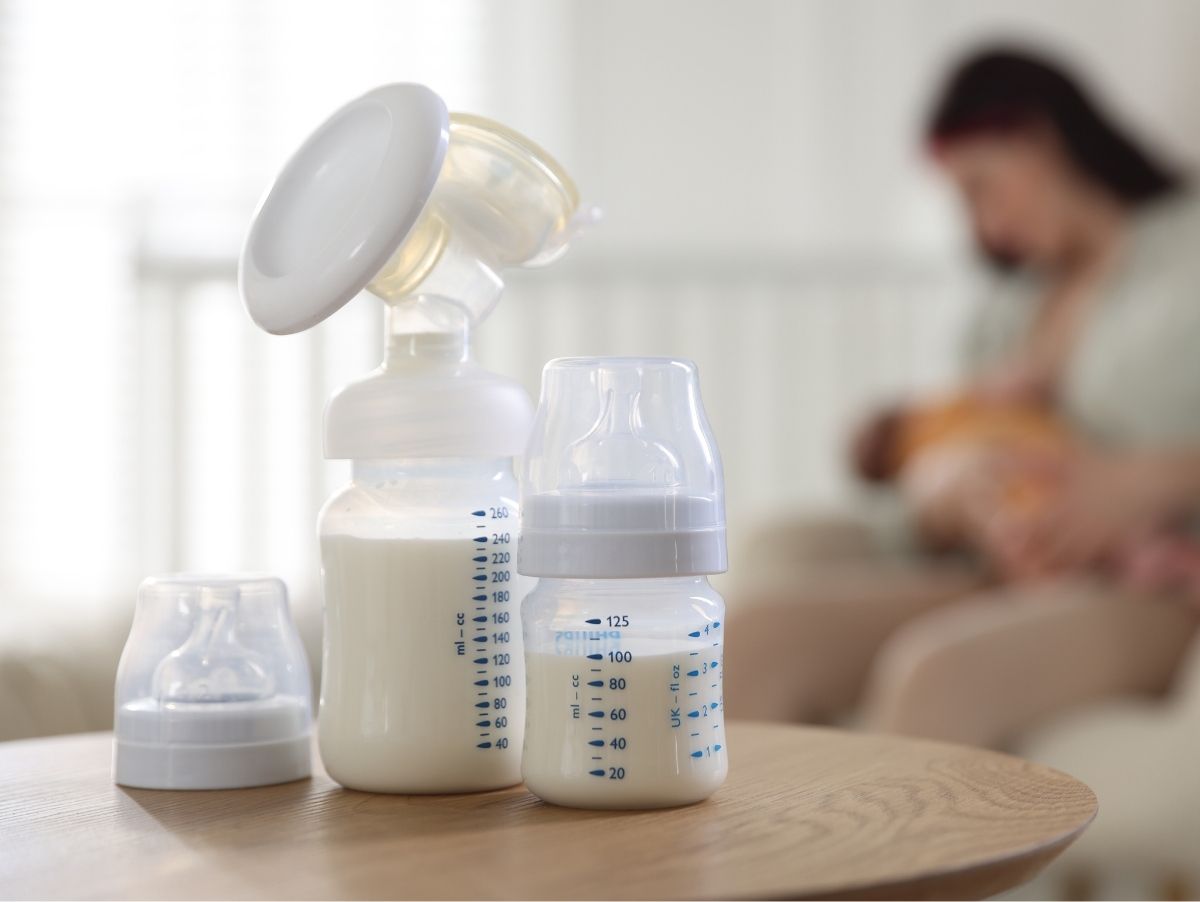
Expressing and Pumping Breast Milk: A Practical Guide
- Expressing breast milk means removing milk from your breast by hand or with a breast pump so it can be collected and used later.
- The method that suits you depends on why you are expressing, how often you expect to do it and your individual circumstances.
- The amount of milk you collect can vary considerably between sessions, and one pumping session is not a reliable measure of your overall milk supply.
- Pumping should not be persistently painful. Persistent discomfort is a reason to seek professional advice.
On this page ▾
On this page ▾
Expressing breast milk means removing milk from your breast by hand or with a breast pump so it can be collected and used later. You might express because you and your baby are temporarily apart, someone else will be feeding your baby, you are returning to work, or direct breastfeeding is not possible for a period of time.
Breast milk can be expressed by hand or with a manual or electric pump. The method that suits you depends on why you are expressing, how often you expect to do it and your individual circumstances. The amount of milk you collect can also vary considerably between sessions, and one pumping session is not a reliable measure of your overall milk supply.
What Does Expressing Breast Milk Mean?
Expressing is the process of removing breast milk without your baby feeding directly at the breast.
You can express using:
- Your hands
- A manual breast pump
- An electric breast pump
The milk that is collected is known as expressed breast milk and can be stored appropriately before being offered to your baby.
Pumping is therefore one method of expressing breast milk:
So, while all breast pumping is a form of expressing, expressing does not always require a pump.
Why Might You Express Breast Milk?
There are many reasons you might choose or need to express, and the reason can influence which method and routine is most suitable.
You may express because:
- You and your baby will be temporarily apart
- Another caregiver will be feeding your baby
- You are returning to work
- Direct breastfeeding is temporarily not possible
- You want milk available for an occasional feed
- You need to remove a small amount of milk in a particular breastfeeding situation
- You are expressing all or most of the breast milk your baby receives
Not every breastfeeding parent needs to pump. Some people rarely or never express, while others use expressing regularly as part of their breastfeeding routine.
If you are planning to express regularly because you are returning to work, see Returning to Work While Breastfeeding.
What Are the Different Ways to Express Breast Milk?
The main options are hand expression, a manual breast pump and an electric breast pump.
| Method | How it works | May suit |
|---|---|---|
| Hand expression | Milk is removed by compressing breast tissue with your fingers | Small amounts, occasional expression or situations where no pump is available |
| Manual pump | A hand-operated mechanism creates suction | Occasional expressing |
| Electric pump | A powered motor creates suction | More regular expressing |
| Double electric pump | Both breasts can be expressed at the same time | Frequent expressing where convenience and time matter |
The most suitable option depends on your circumstances rather than one pump type being best for everyone.
How Do You Hand Express Breast Milk?
Hand expression allows you to remove milk without a pump.
To hand express:
- Wash your hands and prepare a clean container for collecting milk.
- Get comfortable and gently massage your breast towards the nipple.
- Place your thumb and fingers in a C-shape on your breast, behind the nipple.
- Gently press your fingers back into the breast tissue.
- Compress your thumb and fingers towards each other rather than pulling or squeezing the nipple.
- Release the pressure and repeat in a steady rhythm.
- Rotate your finger position around the breast as milk flow changes.
- Collect the milk in your prepared container.
It can take practice to find a hand position and rhythm that works comfortably for you.
Manual and Electric Breast Pumps: Practical Differences
The main factors to consider are how often and why you expect to pump.
A manual pump has no electric motor and is operated by hand to create suction. It may suit occasional expressing or situations where portability and simplicity are important.
An electric breast pump uses a powered motor to create suction and may be more practical if you expect to express regularly. Depending on the model, you may be able to express one breast or both breasts at the same time.
A double pump allows you to express both breasts simultaneously and may reduce the amount of time spent pumping compared with expressing each side separately. Pump performance can vary between models.
If direct breastfeeding is not currently possible, or you need an individual pumping plan, follow advice from your health professional about the approach that suits your circumstances.
How Do You Use a Breast Pump?
Always read the manufacturer's instructions for your particular pump because assembly, settings and cleaning requirements can differ.
A basic pumping session generally follows this sequence:
1. Prepare your pump
Wash your hands and assemble the clean milk-collection equipment according to the manufacturer's instructions.
Sit somewhere comfortable and have your collection container and anything else you need within reach.
Some people find warmth, relaxation or gentle breast massage useful for encouraging milk flow before or during expressing.
2. Position the flange
Place the breast-pump flange over your breast with your nipple centred in the tunnel.
The flange should form a seal against your breast without persistent rubbing, pinching or discomfort.
3. Start with comfortable suction
Begin with a low suction setting and increase it only to a level that remains comfortable.
Higher suction is not automatically better.
4. Allow milk to flow
Milk flow may not begin immediately every time you pump. Milk ejection, often called the let-down reflex, is the process that helps milk move through the breast and begin flowing during feeding or expressing.
Warmth, relaxation and gentle massage may help some people.
If you are single pumping, you may switch breasts during the session. A double pump allows both breasts to be expressed simultaneously.
5. Finish and collect the milk
When you have finished expressing, remove the flange gently and handle the collected milk using appropriate breast-milk storage and hygiene practices.
Clean the required pump components after use according to current guidance and the manufacturer's instructions.
How Should a Breast Pump Flange Fit?
The flange, also called a breast shield, is the part of the pump that sits against your breast.
It forms a seal around the breast while your nipple moves within the flange tunnel as suction is applied. Flanges come in different sizes, and an appropriate fit can make pumping more comfortable.
When pumping:
- Your nipple should be centred in the tunnel
- Your nipple should be able to move freely
- It should not continually rub against the sides
- Pumping should not cause persistent pinching or pain
- The flange should maintain an appropriate seal
A flange may need reassessment if:
- Your nipple repeatedly rubs against the tunnel
- Pumping causes nipple soreness or pain
- A large amount of surrounding areola is pulled into the tunnel
- Milk leaks around the flange
- The fit feels uncomfortable
Nipple size can differ between breasts and can change over time, so some people may need different flange sizes for each breast or may need to reassess fit later.
If you cannot find a comfortable fit, a health professional can help assess the pump and flange.
Should Pumping Hurt?
Pumping should not be persistently painful.
If pumping hurts, check your flange fit and positioning, suction level and pump setup. Persistent discomfort is a reason to seek professional advice.
If you have ongoing breast or nipple pain, or notice a new or persistent breast or nipple change that concerns you, seek appropriate breastfeeding or health professional advice rather than simply increasing suction or changing your pumping routine.
How Long Should You Pump or Express For?
There is no single pumping time that suits every person or every reason for expressing.
How long an expression session takes can vary according to:
- Why you are expressing
- Whether you are using hand expression or a pump
- Whether you are pumping one or both breasts
- Your milk flow
- Your familiarity with expressing
- Your individual response to the pump
Healthdirect notes that pumping until the breast feels softer or milk flow stops may take around 10–15 minutes in some circumstances, but this should not be treated as a universal target for every pumping situation.
If you have been given an individual pumping plan, follow the advice provided for your circumstances rather than a generic time target.
How Much Breast Milk Should You Expect to Pump?
There is no single volume that every parent should expect from one pumping session.
The amount collected can vary according to factors such as:
- Time since your baby last fed or you last expressed
- Time of day
- Which breast you are pumping
- Pump and flange fit
- Milk flow during that session
- Your experience with expressing
- Your reason for pumping
Expressing is also a skill that can become easier with practice.
For that reason, comparing the result of one session with another person's pumped volume is rarely useful.
Does Pump Output Show Your Milk Supply?
No. The amount you express during one pumping session does not by itself show whether your overall milk supply is adequate.
It is important to distinguish:
A breast pump and a breastfeeding baby remove milk differently. A baby who is feeding effectively may remove milk more efficiently than a pump.
If your concern is whether your baby is receiving enough milk, see Signs Your Baby Is Getting Enough Breast Milk.
Is It Normal to Pump More Milk From One Breast?
Yes, the amount expressed can differ between breasts.
Differences can reflect normal asymmetry, recent feeding or expressing history, or how well the pump fits each side.
A difference between sides does not automatically mean there is a problem.
If you notice a significant new change together with persistent discomfort or another feeding concern, seek appropriate breastfeeding or healthcare advice.
How Do You Clean Breast Pump Equipment?
Keeping expressing equipment clean is important because milk comes into contact with pump parts and collection containers.
Before expressing, wash and dry your hands.
After pumping:
- Take apart the pump's milk-collection components as directed
- Clean the parts that come into contact with breast milk
- Use clean collection and storage containers
- Allow cleaned equipment to dry appropriately
- Store clean, dry equipment in a clean place
- Follow your pump manufacturer's instructions
Current Australian Breastfeeding Association guidance says that, for a healthy, full-term baby, expressing equipment used frequently should be thoroughly cleaned at least once every 24 hours. If you express once a day or less, clean the equipment after each use.
If your baby has specific health needs, follow the cleaning guidance provided by your baby's health professional team, as additional precautions may be needed.
Because pump designs differ, always check which components need cleaning.
What Should You Do With Expressed Breast Milk?
Once breast milk has been expressed, it needs to be collected and handled safely.
Depending on when it will be used, expressed milk may need:
- A clean suitable container
- Labelling
- Refrigeration
- Freezing
- Safe thawing
- Appropriate warming before use
What If You Are Concerned About Milk Supply?
If you are expressing because you are concerned about milk supply, the appropriate pumping frequency and strategy depend on the wider feeding situation.
Individual pumping schedules or strategies for increasing milk removal should be considered by a health professional.
What About Exclusive Expressing?
Some parents express all or most of the breast milk their baby receives rather than feeding directly at the breast.
Because exclusive expressing can involve frequent pumping, feeding expressed milk, storage and long-term routine planning, consider seeking individual support if you need help developing a sustainable approach.
What About Expressing When Returning to Work?
Expressing can allow you to continue providing breast milk when you and your baby are separated during work.
Returning to work introduces additional considerations around when and where to express, storing and transporting milk, and choosing equipment for regular use.
See Returning to Work While Breastfeeding for detailed planning.
When Should You Get Breastfeeding or Pumping Support?
Ask for individual support if:
- Pumping is persistently painful
- You cannot find a comfortable flange fit
- You are repeatedly unable to express milk and are concerned
- You are concerned about how your baby is feeding
- You are worried about your milk supply
- You have ongoing breast or nipple discomfort
- You need an individual pumping schedule
- You are exclusively expressing and need help developing a sustainable routine
Depending on the issue, support may be available from a health professional.
Frequently Asked Questions
Can you express breast milk without a pump?+
Yes. Breast milk can be expressed by hand without using a breast pump. Hand expression may be particularly useful when you only need small amounts or do not have access to pumping equipment.
What are the practical differences between manual and electric breast pumps?+
A manual pump may suit occasional expressing, while an electric pump can be more practical if you need to express regularly. Your reason for expressing, frequency of use, budget and personal preferences can help guide the choice.
Why am I only pumping a small amount of milk?+
Pumped volume varies, and expressing can take practice. The amount collected can also depend on when you last fed or pumped and how effectively you respond to the pump. A small amount from one session does not by itself show that you have low milk supply.
Should pumping hurt?+
No. Pumping should not be persistently painful. Check your flange fit, suction level and pump setup, and seek breastfeeding support if discomfort continues.
Why do I pump more from one breast?+
Milk output can differ between breasts and sessions. This difference alone does not necessarily indicate a problem.
Expressing and Pumping Breast Milk: Key Things to Remember
Expressing breast milk means removing and collecting milk either by hand or with a breast pump.
Hand expression, manual pumps and electric pumps can all be useful depending on why and how often you express. If you use a pump, correct setup, a comfortable flange fit and an appropriate suction level can make expressing more comfortable.
The amount you pump will not necessarily be the same every time, and one pumping session should not be used as a standalone measure of your total milk supply or how much milk your baby receives.
Clean your expressing equipment appropriately, handle expressed breast milk safely, and seek individual support if pumping is painful, feeding is difficult or you have concerns about milk supply.
References
- Australian Breastfeeding Association: Expressing: the basics
- Australian Breastfeeding Association: Choosing a breast pump
- Australian Breastfeeding Association: Using a breast pump
- Australian Breastfeeding Association: Cleaning expressing equipment
- Pregnancy, Birth and Baby: How to hand express breast milk
- Pregnancy, Birth and Baby: Breast pumps
- Healthdirect Australia: Expressing and storing breast milk
This article provides general breastfeeding information and does not replace individual assessment. Always read the manufacturer's instructions for your particular pump. Seek individual support if pumping is painful, feeding is difficult or you have concerns about milk supply.