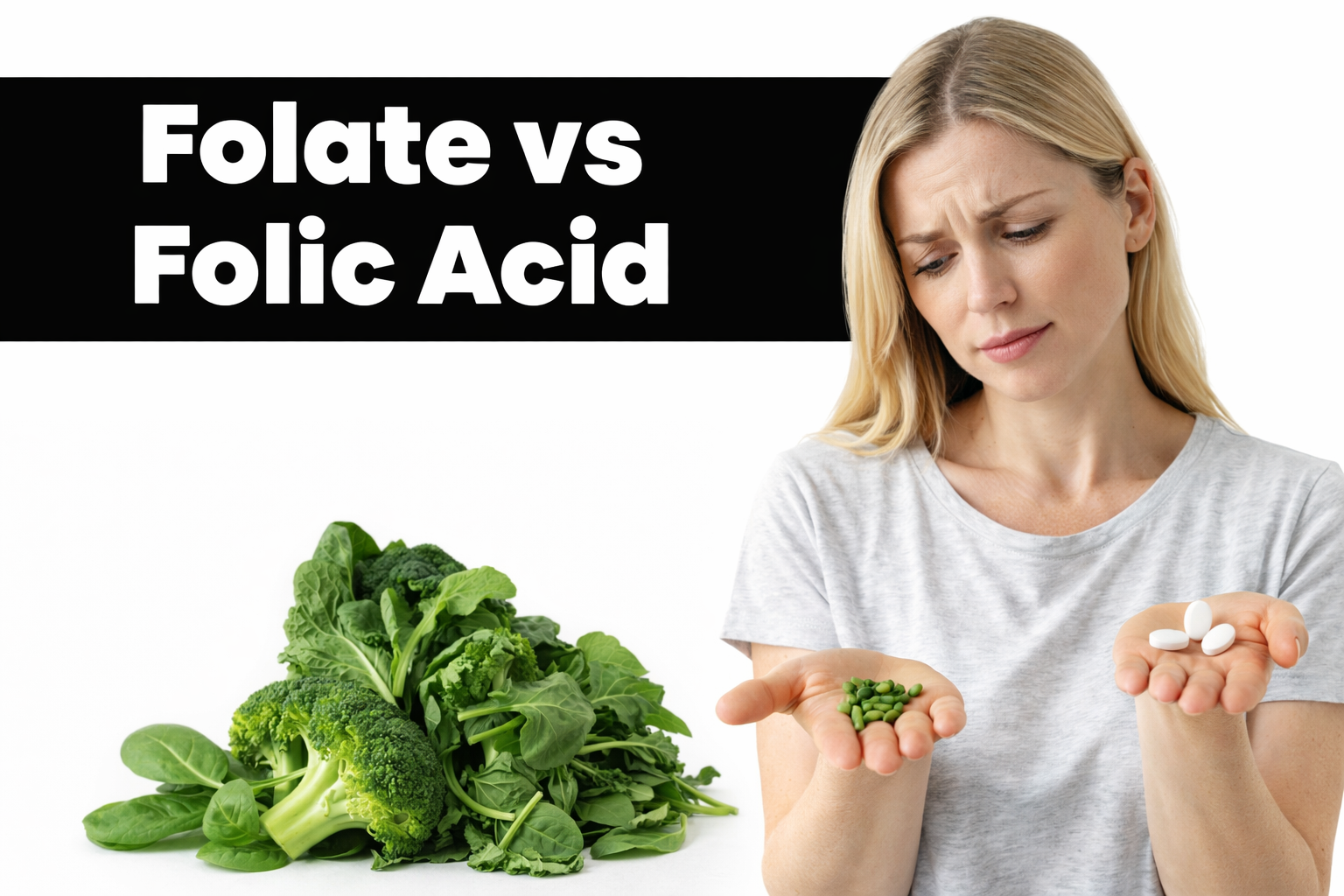
Folate and folic acid are terms commonly used in discussions about everyday nutrition. While they are related, they refer to different forms of vitamin B9. Understanding the difference between folate and folic acid can help clarify how this nutrient appears in foods, fortified products, and supplements. In folate nutrition, these terms are often used in different contexts depending on whether the source is natural or manufactured.
What Is Folate?
Folate refers to the naturally occurring form of vitamin B9 found in a variety of foods. It is commonly discussed in folate nutrition as part of general dietary intake and is present in foods such as vegetables, legumes, and fruits.
What Is Folic Acid?
Folic acid is a manufactured form of vitamin B9 that may be used in fortified foods and dietary supplements. It is commonly listed on ingredient labels and is often included in products where nutrients are added during formulation.
What Is the Difference Between Folate and Folic Acid?
The difference between folate and folic acid is primarily based on their source and form.
-
Folate is the naturally occurring form of vitamin B9 found in foods
-
Folic acid is a manufactured form used in fortified foods and supplements
In folate vs folic acid comparisons, both are discussed within the same nutrient group but are described differently depending on how they are sourced and used.
Dietary Sources of Folate
Folate is naturally present in a range of foods that may be included in a balanced diet.
Common dietary sources of folate include:
-
Leafy green vegetables such as spinach and kale
-
Legumes including lentils and chickpeas
-
Fruits such as oranges and avocados
-
Whole grains and some cereals
These foods are commonly referenced in folate nutrition as part of everyday dietary patterns.
Folate and General Nutrition
In folate nutrition, folate is often discussed alongside other B vitamins as part of general dietary intake. It is included in a variety of foods and may also appear in fortified products and supplements. Some individuals may explore preconception nutrition supplements as part of broader nutrition awareness, where folate or folic acid may be included among other nutrients.
Folate and Folic Acid on Supplement Labels
Folate and folic acid may appear differently on food and supplement labels, depending on the form used in the product.
How Folate Appears on Labels
Folate may be listed on labels using terms such as “folate” or as part of ingredient descriptions in food products. In supplements, folic acid is often used and listed accordingly.
Understanding Ingredient Names
Ingredient names may vary depending on formulation and labelling standards. For example, folic acid may be listed directly, while folate may appear in relation to naturally occurring food sources or specific compound names.
Can Nutrient Needs Vary Between Individuals?
Nutrient intake and dietary patterns can vary between individuals based on factors such as food preferences, lifestyle, and cultural dietary habits. As a result, folate nutrition is generally discussed in a broad and flexible way rather than as a fixed requirement.
Safety and Professional Guidance
This information is intended for general educational purposes. Nutrition choices, including the use of supplements, may vary between individuals. It is generally recommended to seek advice from a qualified healthcare professional before making changes to diet or supplement use.
Frequently Asked Questions About Folate and Folic Acid
Is folate the same as folic acid?
No, folate and folic acid are not the same. Folate is the naturally occurring form of vitamin B9 found in foods, while folic acid is a manufactured form commonly used in fortified foods and supplements. Both are discussed within the same nutrient category in folate nutrition.
Where is folate found naturally?
Folate is naturally found in a variety of foods, particularly vegetables, legumes, fruits, and whole grains. These foods are commonly included in everyday dietary patterns where folate nutrition is discussed.
Why do food labels mention folic acid instead of folate?
Food labels often mention folic acid because it is the form used in fortified foods and added during manufacturing. Folate, by contrast, refers to the naturally occurring form found in whole foods.
Which foods naturally contain folate?
Foods that naturally contain folate include leafy green vegetables, legumes such as lentils and chickpeas, fruits like oranges and avocados, and whole grains. These foods are commonly referenced in discussions about folate nutrition.
What does “fortified with folic acid” mean on food packaging?
“Fortified with folic acid” means that folic acid has been added to a food product during production. This is done as part of food formulation and labelling practices.
What role does folate play in a general nutrition plan?
Folate is included in general nutrition discussions as part of overall dietary intake. It is commonly obtained from foods and may also appear in fortified products and supplements, depending on individual dietary patterns.