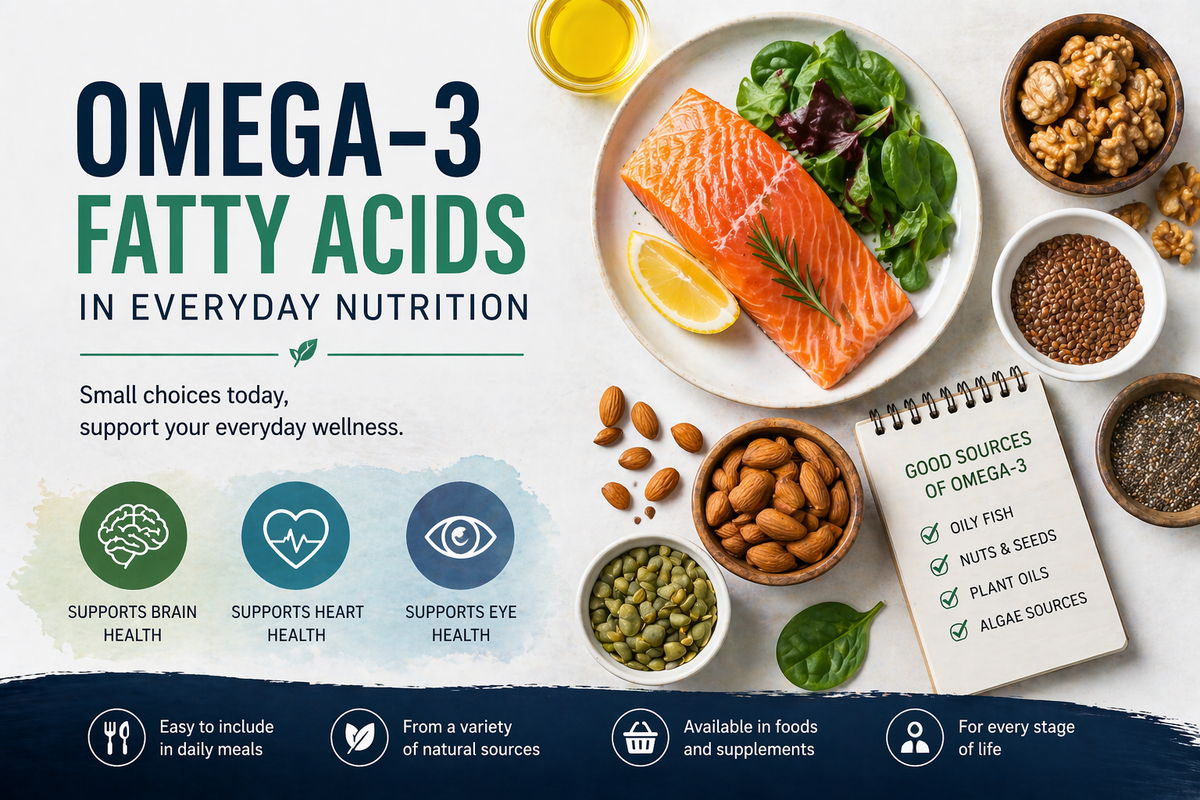
Omega-3 fatty acids are commonly discussed as part of a balanced diet and everyday nutrition. Found in a variety of foods and supplements, these fats are considered essential because the body relies on dietary sources to obtain them.
When people explore omega-3 fatty acids, they often come across names such as DHA, EPA, and ALA. These are the three main forms typically mentioned in nutrition conversations, each with different food sources and characteristics. Understanding the types of omega-3 fatty acids can help make food choices and product labels easier to interpret.
What Are Omega-3 Fatty Acids?
Omega-3 fatty acids are a family of polyunsaturated fats naturally present in certain foods. They are described as essential fats because they need to be obtained through the diet.
These fats are commonly found in foods such as oily fish, seeds, nuts, and some fortified products. Intake levels can vary depending on food preferences, dietary patterns, and individual choices.
Why Omega-3 Fatty Acids Are Discussed in Everyday Nutrition
Omega-3 fatty acids are regularly included in conversations about balanced eating patterns because they are present in a range of commonly consumed foods. Many people review their intake of foods containing omega-3s when considering overall dietary variety.
Interest in omega-3s has also grown alongside greater awareness of ingredient labels, meal planning, and food choices. Some individuals choose to learn more about DHA in everyday nutrition, while others compare plant-based and marine-based sources.
Types of Omega-3 Fatty Acids
The three most commonly referenced omega-3 fatty acids are DHA, EPA, and ALA.
DHA (Docosahexaenoic Acid)
DHA is typically found in marine sources such as oily fish and algae-based ingredients. It is one of the most recognised omega-3 forms listed on food and supplement labels.
EPA (Eicosapentaenoic Acid)
EPA is also commonly sourced from marine foods and fish oil ingredients. It often appears alongside DHA in seafood-based products.
ALA (Alpha-Linolenic Acid)
ALA is primarily found in plant foods such as flaxseeds, chia seeds, walnuts, and canola oil. It is the most common omega-3 form in plant-based diets.
Many readers also explore the differences between DHA and EPA when comparing the main marine-derived forms of omega-3.
Dietary Sources of Omega-3 Fatty Acids
Omega-3 fatty acids can come from a variety of foods, depending on the type:
-
DHA and EPA sources: salmon, sardines, mackerel, anchovies, trout, algae-based foods
-
ALA sources: flaxseeds, chia seeds, walnuts, hemp seeds, soy foods, and canola oil
Including a variety of these foods can contribute to overall dietary fat intake and meal diversity.
Omega-3 Fatty Acids in Food vs Supplements
Food sources provide omega-3s as part of a wider dietary pattern that may also include protein, fibre, vitamins, and minerals. For this reason, some people choose to review food choices first when considering intake.
Supplements are another option some individuals explore, particularly when certain foods are not regularly consumed. Product labels for omega-3 supplements may list total oil content alongside separate DHA and EPA amounts, depending on the product format.
Can Omega-3 Intake Vary Between Individuals?
Yes, omega-3 intake can vary between individuals. Factors that may influence intake include:
-
Whether seafood is eaten regularly
-
Vegetarian or vegan dietary preferences
-
Personal taste and food choices
-
Access to preferred foods
-
Cultural eating patterns
-
Use of fortified foods or supplements
Because dietary habits differ, intake levels are not the same for everyone.
FAQs
What is the difference between DHA, EPA, and ALA?
There are three forms of omega-3 fatty acids. DHA and EPA are commonly found in marine sources, while ALA is mainly found in plant foods such as seeds and nuts.
Where do omega-3 fatty acids come from?
They can come from foods such as oily fish, algae, flaxseeds, chia seeds, walnuts, and certain plant oils.
Are DHA and EPA the same as omega-3?
DHA and EPA are types of omega-3 fatty acids. Omega-3 is the broader category that includes DHA, EPA, and ALA.
How are omega-3 fatty acids listed on supplement labels?
Labels may show total oil content as well as separate amounts for DHA and EPA. Formats can vary between products.
Can omega-3 intake vary between individuals?
Yes. Food choices, dietary preferences, and supplement use can all influence intake.